
Ride-hailing networks, delivery apps, and freelancer marketplaces pay thousands of contractors on schedules that traditional payroll systems cannot handle. Market researchers value the global gig economy at $674.1 billion for 2026, and MBO Partners counted 72.9 million independent workers in the US alone during 2025. For these platforms, the most challenging part is paying a distributed workforce in minutes rather than days, which is what a payment gateway built for gig economy platforms automates.
The strongest option for gig economy payments in 2026 is NOWPayments. It settles 99% of deposits in under one minute, clears mass payouts in an average of 1–3 minutes, and delivers email payouts in under one second at a 0% service fee. Its ecosystem combines acceptance, payouts, conversions, custody wallets, and treasury workflows, making it the strongest fit for platforms that pay global contractor networks in stablecoins.
Below is our payment providers list for gig economy platforms in 2026:
- NOWPayments
- Trolley
- Gig Wage
- Branch
- Payoneer
What Gig Payments Demand from a Provider
A gig platform collects money from customers in one flow and pushes it out to drivers, couriers, freelancers, and affiliates in another. The provider has to handle both sides or fit cleanly into one of them: batch payouts to hundreds of workers, per-shift settlement, tax documentation, and payout methods workers actually use.
Key requirements include:
- Payout speed per shift. Pay after each completed job, whether during the day or at night, in seconds or minutes.
- Mass payouts. Send hundreds or thousands of contractor payments in one batch over API or CSV.
- Payout method breadth. Bank transfers, debit cards, wallets, and stablecoins so workers choose how they get paid.
- Compliance and tax. W-9/W-8 collection, 1099 filing, DAC7 reporting, and KYC/AML checks.
- Worker-facing virtual payment solutions. Cards, wallets, and early-pay options that keep contractors on the platform.
- Coverage and FX. Multi-country payouts with published currency-conversion costs.
How We Ranked the Best Payment Providers for Gig Economy Platforms
We compared payment gateways for gig work against three criteria that matter to platform operators in 2026:
- Payout Speed and Methods. Delivery time per rail, 24/7 availability, instant options, and coverage of countries and currencies.
- Total Cost. Per-payout fees, monthly or annual subscriptions, FX markups, and compliance add-ons, not just the headline rate.
- Business Features. Mass payout tooling, API quality, tax automation, worker onboarding, support hours, and scalability to enterprise volume.
| Feature | 1. NOWPayments | 2. Trolley | 3. Gig Wage | 4. Branch | 5. Payoneer |
|---|---|---|---|---|---|
| Fees | 0.3–1% deposits; 0% payouts |
From $1/payout; $1,199+/yr; 2% FX |
$7–10/user/mo; 2.9% instant |
Custom; 2% instant (min $2.99) |
Up to 3.99% + $0.49; 2% FX |
| Speed | 1–3 min; email <1 sec |
Same day to 5 days |
Instant debit; ACH ~2 days |
Wallet 1–5 sec; ACH 3 days |
P2P seconds; bank 0–3 days |
| Mass Payouts | 1,000+ per batch |
API, CSV, portal |
Batch, API |
Dashboard, API |
500/request |
| Methods | 350+ coins; 30+ stablecoins |
ACH, SEPA, PIX, PayPal, Venmo |
ACH, debit cards |
Wallet, debit, ACH |
Bank, P2P |
| Instant Pay | 24/7 | US debit | 24/7 | After shifts | P2P only |
| Tax / 1099 | Guidance, reports |
1099, 1042-S, DAC7 |
$5/filing | White label 1099 |
❌ |
| Crypto | ✅ | ❌ | ❌ | ❌ | ✅ |
| API | ✅ | ✅ | ✅ | ✅ | ✅ |
| Coverage | Global | 210+ countries | US | US | 190+ countries |
| 24/7 Support | ✅ | ❌ | ❌ | ❌ | ✅ |
| Best For | Global crypto payouts |
Payouts and tax |
US contractors |
Worker payouts |
Global marketplaces |
*Fees, speeds, and coverage change often. Verify current terms on each provider’s official site before signing up.
NOWPayments
Best for: A crypto business ecosystem covering acceptance, mass payouts, conversions, custody wallets, and treasury workflows for a global gig workforce.
Skip it if: You need fiat-only rails, built-in 1099 filing, or a locally licensed bank account in every corridor.
NOWPayments is a crypto payment gateway built as a full business ecosystem rather than a checkout tool. It combines acceptance, mass payouts, conversions, custody wallets, and treasury workflows in one account. It is custodial by default, so wallet infrastructure, rate locking, and outbound transfers are handled internally. This structure fits gig economy platforms that pay contractors in stablecoins, automate cross-border payouts, and manage a treasury without hiring a blockchain team. Partnership also covers tax and compliance guidance plus hands-on operational support, which rounds out the monetization side of running contractor programs.
Supported Payment Methods. Settlement centers on stablecoins rather than long altcoin lists: the platform supports 30+ stablecoins, including USDT and USDC, across ERC-20, TRC-20, BNB Smart Chain, Solana, Polygon, and other major networks. The wider catalog covers 350+ digital assets, and payouts can go to wallet addresses in batches or to any email address, which removes the need to collect wallet details from every contractor. Fiat on- and off-ramps run through licensed partners, so a platform can still bridge to bank accounts where required. Recipients paid by email receive an automatically created ChangeNOW Pro wallet, cutting onboarding friction for large gig networks.
| Feature | NOWPayments |
| USDT / USDC Support | ✅ |
| Stablecoins | 30+ |
| Total Assets | 350+ |
| Mass Payout Batch | 1,000+ recipients |
| Email Payouts | ✅ |
| Custody | ✅ |
| Fiat Rails | Via licensed partners |
Transaction Fees. NOWPayments charges a 1% service fee on single-currency deposits and 1.5% on multi-currency deposits, with partner rates as low as 0.3% for eligible businesses. Conversions cost 0.5%, payouts carry a 0% service fee, and ChangeNOW Pro email payouts come with a $0 network fee. Setup, integration, and dedicated account optimization are free.
| Fee Type | Rate |
| Single-Currency Deposits | From 1%, down to 0.3% |
| Multi-Currency Deposits | 1.5% |
| Conversions | 0.5% |
| Payouts | 0% service fee |
| ChangeNOW Pro Payouts | $0 network fee |
Business-Focused Features. NOWPayments processes 99% of deposits in under one minute, with an average transaction time of about five minutes across networks. Mass payouts average 1–3 minutes, standard stablecoin payouts average 26 seconds on BNB Smart Chain and 94 seconds on Ethereum ERC-20, and ecosystem email payouts land in under one second. The REST API reports 99.99% uptime with a 350 ms average response time, and plugins cover major e-commerce systems. A 24/7 support team handles custom account optimization, and the ecosystem adds an earning layer through its 25% lifetime affiliate program and payroll cashback for payout programs.
| Feature Area | Key Capabilities |
| Payout Infrastructure | Mass payouts, email payouts, custody balances |
| Treasury Automation | API, scheduled withdrawals, webhooks |
| Stablecoin Settlement | USDT, USDC, cross-border contractor payouts |
| Enterprise Scale | High-volume processing, custom terms, 24/7 support |
| Ecosystem | Payments + payouts + conversions + wallets + monetization |
What Makes NOWPayments Different:
- Business ecosystem, not a checkout button. Acceptance, mass transfers, conversions, custody wallets, and recurring billing live in one dashboard, with room to grow into affiliate and creator monetization.
- Zero-fee payout rail. Email payouts carry no service or network fees, which is rare at volume among payment providers for gig work.
- Speed without an in-house blockchain team. Sub-minute deposits, 1–3 minute mass payouts, and sub-second email payouts out of the box.
Sources:
Trolley
Best for: Marketplaces that want payouts and full tax compliance for contractors in a single stack.
Skip it if: You need to accept payments from customers, 24/7 settlement rails, or crypto payouts.
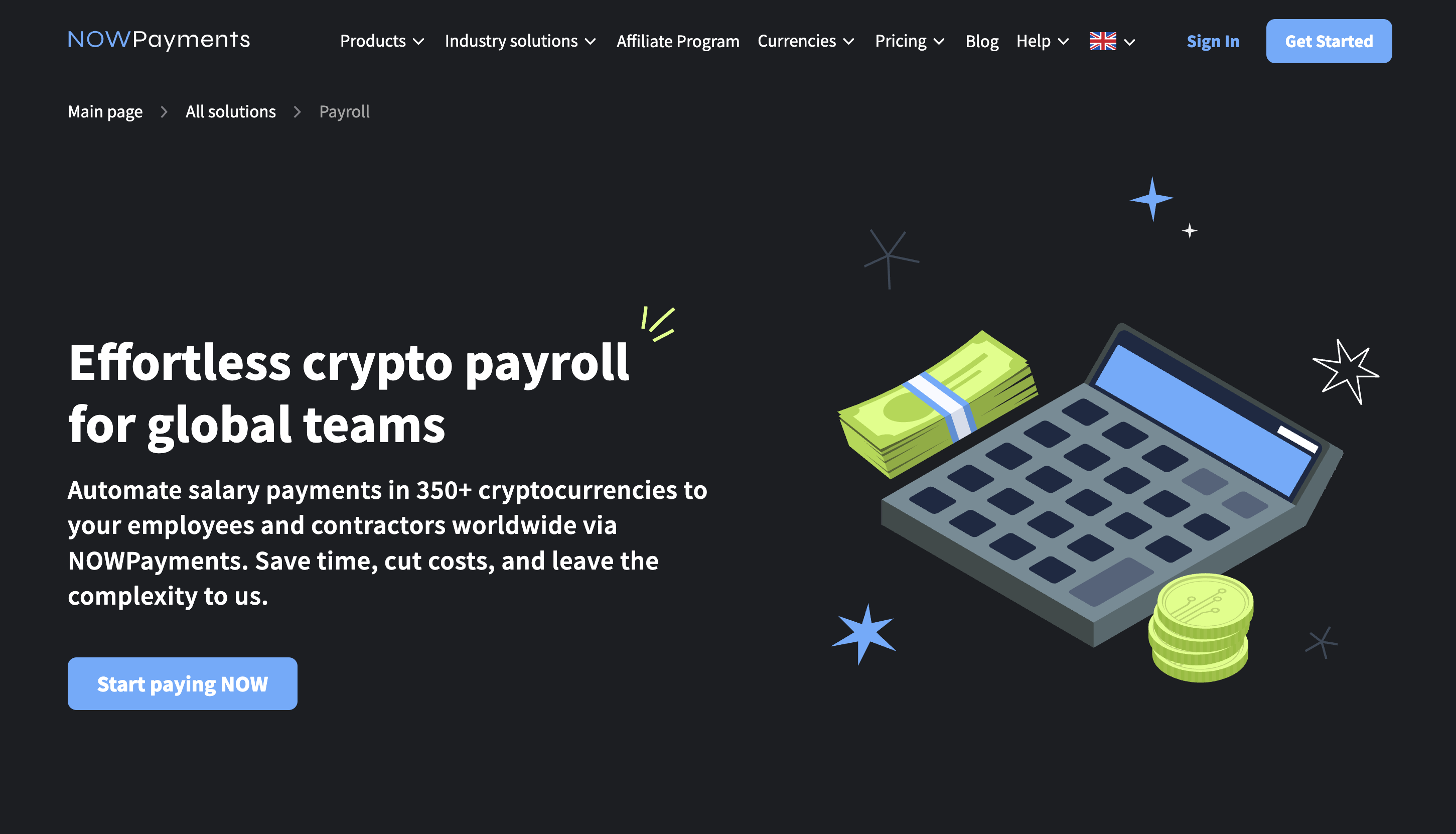
Trolley is a payouts-only infrastructure provider for the internet economy: it moves money out to contractors but does not process customer payments. Its core differentiator is embedded tax compliance, including digital W-9 and W-8 collection, 1099 and 1042-S filing, and DAC7 reporting for platforms selling into the EU. The service reaches 210+ countries and 135+ currencies through one API and a white-label payee portal. On-demand platforms, creator networks, and gig marketplaces such as Topcoder, UnitedMasters, and Canva use it to pay distributed workforces.
Supported Payment Methods. Trolley delivers through local rails such as ACH, EFT, SEPA, FPS, NPP, BECS, and PIX, plus SWIFT wires, PayPal, Venmo, checks, and mobile wallets in 25+ countries. US payees can receive instant debit-card payouts. Coverage spans 210+ countries and 135+ currencies, making it suitable for gig platforms that pay a globally distributed contractor base.
| Feature | Trolley |
| Countries | 210+ |
| Currencies | 135+ |
| Local Rails | ACH, SEPA, FPS, NPP, BECS, PIX |
| Wallets | PayPal, Venmo |
| Instant Debit Card | ✅ |
| Checks | ✅ |
Transaction Fees. Trolley sells its platform in modules: Pay costs $2,399 per year, Tax costs $2,399 per year, and the Trust KYC module costs $1,199 per year, so a full stack runs about $7,895 annually before transaction fees. Per payout, domestic ACH costs $1, international local rails cost $4, wires with FX cost $10, USD-only wires cost $25, debit card payouts cost 1% with a $1.50 minimum, PayPal is free, and Venmo costs $1.50. Currency conversion carries a 2.0% FX fee, tax statements add $2 per 1099 and $3 per DAC7, and onboarding to bank rails can take from a few days up to several weeks.
| Fee Type | Rate |
| Pay Module | $2,399/yr |
| Tax Module | $2,399/yr |
| Trust Module (KYC) | $1,199/yr |
| Domestic ACH | $1.00 per payout |
| International Local Rails | $4.00 |
| Wire with FX | $10.00 |
| Debit Card Payout | 1% (min $1.50) |
| FX Conversion | 2.0% |
| 1099 Statement | $2.00 |
Business-Focused Features. US ACH payouts arrive the next business day, domestic wires clear the same day, and international payouts take 1–5 days depending on the corridor. The REST API supports batch payouts, scheduling, multi-level approval workflows, and a white-label payee portal, with accounting sync for QuickBooks, Xero, and NetSuite. KYC scanning costs $2.50 per verification after the first 10 are free each month. Support runs on business-hours channels with priority routing; there is no 24/7 line.
| Feature Area | Key Capabilities |
| Tax Compliance | W-9/W-8 e-signature, 1099/1042-S, DAC7 |
| Payout Rails | 210+ countries via one API |
| Portal | White-label payee onboarding |
| Accounting | QuickBooks, Xero, NetSuite |
| Risk | OFAC screening, KYC/KYB |
What Makes Trolley Different:
- Compliance engine inside the payout flow. Tax forms, withholding, and platform reporting ship with the same API that moves the money.
- Payout method breadth. Few competitors combine local bank rails, PIX, PayPal, Venmo, and instant debit cards in one contract.
- White-label payee experience. Contractors onboard under the platform’s brand, not the processor’s.
Sources:
Gig Wage
Best for: US gig platforms that want contractor payments and 1099 compliance in a single tool.
Skip it if: You pay workers outside the US or need W-2 payroll alongside contractors.
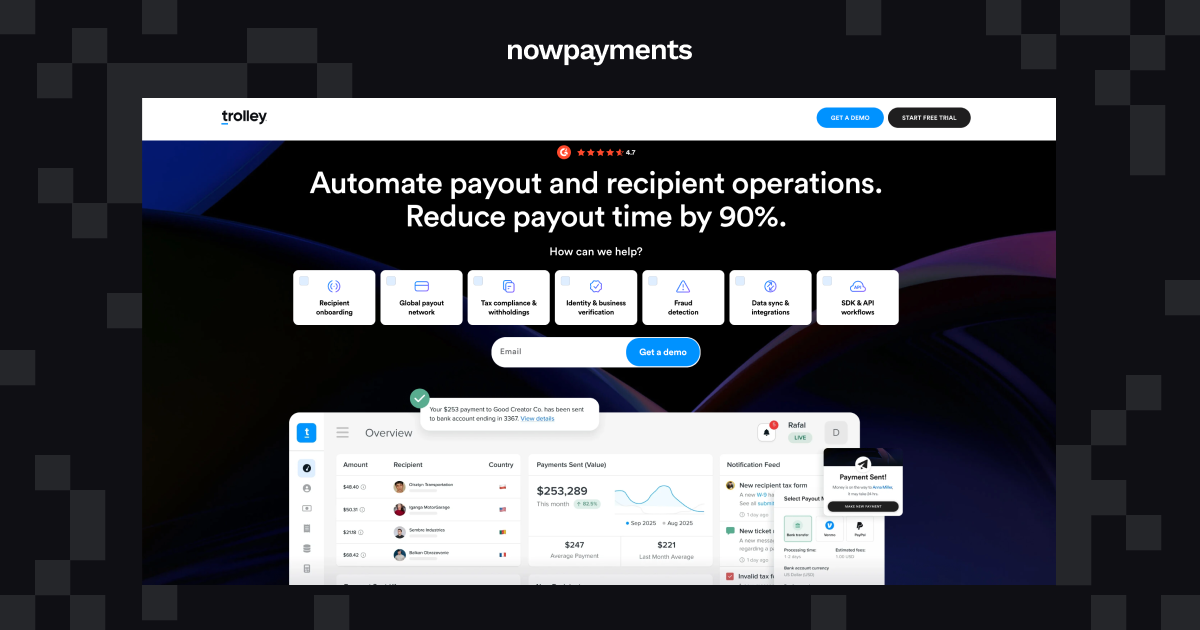
Gig Wage is a contractor payments and compliance platform built exclusively for US gig work, a category it calls GigForce Management. The product combines onboarding, instant payments, and 1099 filing in one dashboard, with a wallet where contractors choose how to withdraw earnings. The company reports nearly $1 billion paid out to close to 1 million contractors across 500+ businesses. Lyft, AT&T, and Omni Interactions appear among its named customers, and the platform runs in all 50 states.
Supported Payment Methods. Standard payouts run over ACH direct deposit to any US bank account and take about two business days, with same-day ACH available for submissions before 11:00 AM CST. Gig Wage also pushes funds within seconds to any Visa or Mastercard debit card, processing 24 hours a day, seven days a week, once the business account is funded. Since the Gig Wage 2.0 relaunch in December 2024, contractors first receive money in a Gig Wage wallet and then pick a withdrawal method. Paper checks and international payouts are not supported.
| Feature | Gig Wage |
| ACH Direct Deposit | ~2 business days |
| Same-Day ACH | Cutoff 11:00 AM CST |
| Push-to-Debit | Any Visa/Mastercard, seconds |
| Worker Wallet | ✅ |
| Checks | ❌ |
| Coverage | US only |
Transaction Fees. Plans are billed per active contractor: $10 per month on Basic and $7 per month on Pro for businesses with 300 or more contractors, with custom enterprise terms for 1,500+. Standard ACH is included in the subscription, while instant push-to-debit carried a 2.9% rack rate that now varies by business and is shown in the contractor dashboard. E-filing a 1099 costs $5 per filing and covers all federal and state forms.
| Fee Type | Rate |
| Basic Plan | $10 per active contractor/mo |
| Pro Plan (300+) | $7 per active contractor/mo |
| Enterprise (1,500+) | Custom |
| Standard ACH | Included |
| Instant Push-to-Debit | 2.9% (rack rate, varies) |
| 1099 E-Filing | $5 per filing |
Business-Focused Features. Instant payments process around the clock once the account is funded, and the company advertises contractors getting paid two to five days sooner than with traditional payroll cycles. The API includes a sandbox on lower tiers and production access on higher ones, alongside batch payments and an embeddable 1099 payroll flow. Onboarding covers W-9 capture, TIN matching, identity verification through HyperVerge, and background checks through Yardstik. Support runs Monday to Friday, 9 AM to 5 PM CT, with an optional Slack channel for API customers at $300 per month.
| Feature Area | Key Capabilities |
| Speed | Instant pay 24/7/365; same-day ACH |
| Compliance | W-9 capture, TIN match, 1099-NEC/MISC/K |
| Developer Tools | API, sandbox, webhooks |
| Integrations | When I Work, custom enterprise |
| Support | M–F 9–5 CT; Slack add-on $300/mo |
What Makes a Gig Wage Different:
- Per-contractor pricing. Platforms pay only for contractors they actually paid last month, which keeps costs aligned with active headcount.
- 1099 payroll as the core product. Tax filing is not an add-on module, it ships with every plan at $5 per filing.
- US focus. Every rail, from ACH cutoffs to state filings, is optimized for domestic gig work rather than adapted from cross-border tooling.
Sources:
Branch
Best for: US platforms that want free instant pay after every shift, plus a banking app that workers keep using.
Skip it if: You operate outside the US or need published platform pricing before a sales call.
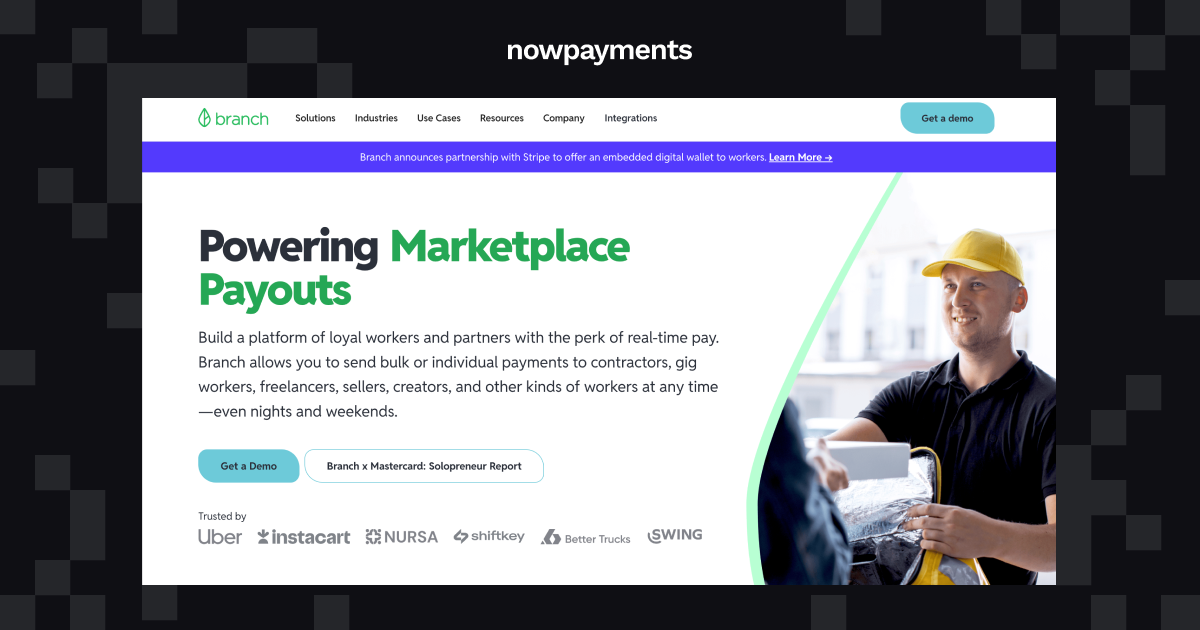
Branch is a workforce payments platform that pairs instant payouts with a free banking app for hourly and gig workers. It is best known for powering the Uber Pro Card and the Instacart shopper card, where cashouts after each trip land in one to five seconds on average. Instead of charging platforms per payout, Branch monetizes through interchange, which lets it offer instant pay at little or no cost to the business. Vendor-reported results include an 87% drop in driver churn at Rapid Medical and a 98% weekly wallet return rate at Union Square Hospitality Group.
Supported Payment Methods. Workers receive money in an FDIC-insured Branch wallet or on a Branch Mastercard debit card, with cashouts landing one to five seconds after a trip or shift, 24/7. Free standard transfers to an external bank take about three business days, and payroll direct deposit can arrive up to two days early. The card works at 55,000+ Allpoint ATMs with eight free withdrawals per month, after which ATM access costs $2.
| Feature | Branch |
| Worker Card | Mastercard debit (Uber Pro Card) |
| Wallet | FDIC-insured, account and routing numbers |
| Cashout Speed | 1–5 sec average to wallet |
| Bank Transfer Out | Free, ~3 business days |
| ATM Network | 55,000+ Allpoint |
| Coverage | US only |
Transaction Fees. Branch does not publish platform pricing and quotes each business individually, marketing the product as free or nearly free for employers with no pre-funding required. For workers, instant transfers from the wallet to an external debit card cost 2% with a $2.99 minimum and a $300 daily cap. Standard ACH transfers to a bank are free up to $5,000 per day, and earned wage access is free when funds stay in the Branch wallet. Out-of-network ATM withdrawals cost $2, international ATM access costs $3, and international card transactions carry a 4% fee.
| Fee Type | Rate |
| Platform Pricing | Quote-based (interchange model) |
| Instant External Transfer | 2% (min $2.99, cap $300/day) |
| Standard Bank ACH | $0 (up to $5,000/day) |
| Earned Wage Access | $0 in wallet |
| Out-of-Network ATM | $2.00 |
| International Transaction | 4% |
Business-Focused Features. Payouts run through a dashboard and API with full white-label programs, and Branch handles end-to-end 1099 automation, including W-9 collection and filing. The app adds savings goals, cashback offers, and budgeting tools that keep workers engaged between shifts. Vendor data says 70% of gig workers report more loyalty to platforms that pay the same day. Support is US-based during business hours, and Trustpilot reviews are mixed on transfer speed and responsiveness.
| Feature Area | Key Capabilities |
| Instant Pay | After each shift, 24/7 |
| White Label | Card and wallet programs (Uber, Instacart) |
| Tax | 1099 automation, W-9 collection |
| Worker App | Cashback, savings, budgeting |
| Model | No platform fees; interchange revenue share |
What Makes Branch Different:
- Free for workers and platforms. Interchange revenue replaces per-payout fees, so instant pay costs the business nothing at the point of use.
- Marquee proof at scale. The Uber Pro Card processes cashouts in seconds after every trip, which is the model most gig platforms reference.
- Retention data. Vendor-reported metrics tie same-day pay to lower churn and more shifts picked up per worker.
Sources:
Payoneer
Best for: Global marketplaces and gig platforms paying freelancers and contractors at scale.
Skip it if: You need on-chain settlement today or a native 1099 filing for US contractors.
Payoneer is a multi-currency payouts platform that has served freelancer and gig marketplaces since the mid-2000s. Upwork has paid freelancers through it since 2009, and the network now covers 2,000+ platforms, including Fiverr, Airbnb, and Etsy. It operates in 190+ countries and territories and supports 70+ payout currencies, with white-label payout programs where Payoneer handles payee KYC. The company processed $80 billion in volume and generated $977.7 million in revenue in fiscal 2024.
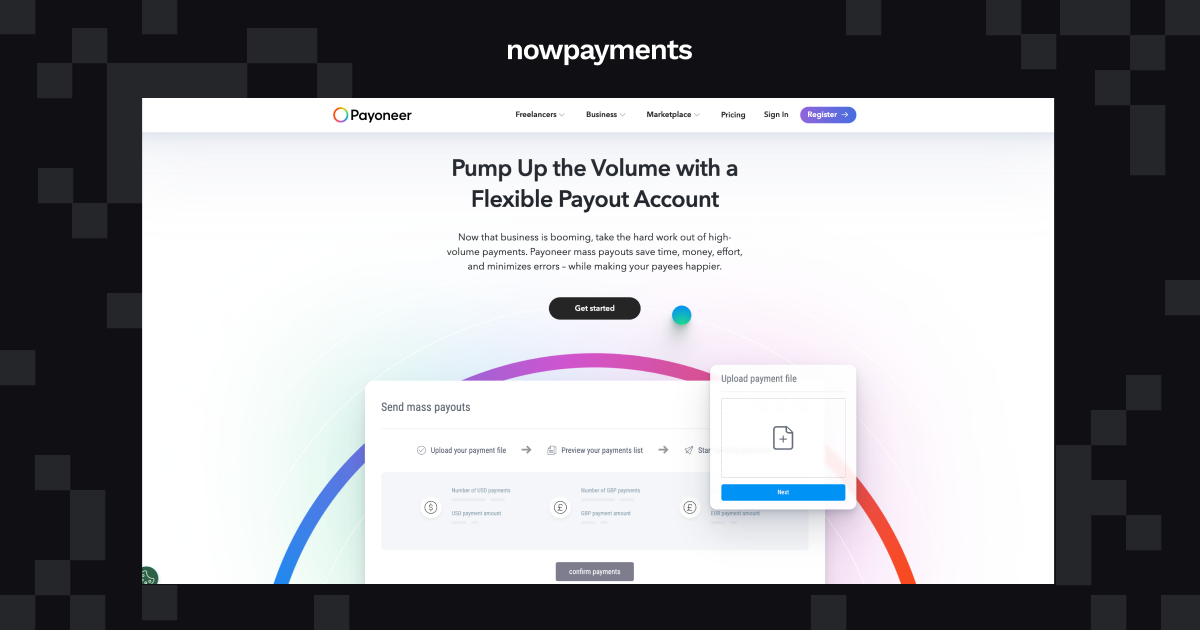
Supported Payment Methods. Contractors can hold funds in a Payoneer balance, withdraw to local bank accounts in 70+ currencies, or spend with a prepaid Mastercard. Payoneer-to-Payoneer transfers credit in seconds, local bank transfers land in one to three business days, and card-funded receipts take about two calendar days. The mass payout API sends batches of up to 500 payouts per request, with CSV upload and white-label payee onboarding. Direct on-chain settlement is absent, though stablecoin receive-and-send capabilities announced in February 2026 are scheduled to roll out from the second quarter of 2026.
| Feature | Payoneer |
| Countries / Territories | 190+ |
| Payout Currencies | 70+ |
| P2P Transfer Speed | Seconds |
| Bank Withdrawal | Same-day to 3 business days |
| Mass Payout Batch | 500 per API request |
| Card | Prepaid Mastercard ($29.95/yr) |
| Stablecoins | From Q2 2026 |
Transaction Fees. Receiving into a local-currency account is free, while card receipts cost up to 3.99% plus $0.49 and ACH or EU/UK bank debits cost 1%. Withdrawals to a same-currency bank cost a flat $1.50 up to $50,000 per month, then 0.5%, and a $4 flat fee now applies to transfers under $400. Cross-currency withdrawals run up to 2% above mid-market, and sending to another Payoneer user costs $4 same-country or 1% (minimum $4) cross-border. Mass payout pricing is custom and volume-based.
| Fee Type | Rate |
| Local-Currency Receiving | Free |
| Card Receipts | Up to 3.99% + $0.49 |
| ACH / EU-UK Bank Debit | 1% |
| Same-Currency Withdrawal | $1.50 flat (then 0.5% above $50k/mo) |
| Small Transfer Fee | +$4 under $400 |
| Cross-Currency Withdrawal | Up to 2% |
| Card Annual Fee | $29.95 |
Business-Focused Features. Bank withdrawals complete same-day to three business days depending on the corridor, and Payoneer runs 24/7 support via chat and phone in roughly 35 languages. The business layer includes multi-currency balances, working capital advances of up to 140% of average monthly payouts capped at $750,000 for e-commerce sellers, and accounting exports. KYC and AML across 190+ jurisdictions are handled by Payoneer itself, which removes verification work from the platform. US tax forms are the platform’s own responsibility, since 1099 filing is not part of the product.
| Feature Area | Key Capabilities |
| Global Payouts | 190+ countries, 70+ currencies |
| Developer Tools | Payouts API, webhooks, sandbox |
| White Label | Branded payee onboarding |
| Working Capital | Capital Advance up to 140% of monthly payouts |
| Support | 24/7, ~35 languages |
What Makes Payoneer Different:
- Marketplace depth. With 2,000+ integrated platforms, it is the default rail for gig marketplace payouts from Amazon to Upwork.
- Handled compliance. Payoneer performs payee KYC and AML across 190+ jurisdictions, so platforms outsource verification entirely.
- Working capital. Capital Advance ties financing to payout history, up to $750,000 for qualifying sellers.
Sources:
How to Choose Between These Payment Gateways
Match a provider to your contractor geography, payout volume, and compliance load. Use these steps to compare options:
- Map your payout flows. List after-shift payments, weekly settlements, commissions, bonuses, and refunds.
- Check whether you also accept payments. Some platforms only send payouts; others need customer-side collection working in the same system.
- Verify country and currency coverage. US-only operations can use Gig Wage or Branch; global workforces need Trolley, Payoneer, or crypto rails.
- Compare total cost. Add per-payout fees, subscriptions, FX markups, and tax add-ons, not just the headline rate.
- Confirm speed per rail. Ask for exact delivery times in seconds, minutes, or business days, and test one live payout before committing.
- Decide what workers need. Wallets, cards, and other virtual payment solutions affect retention as much as speed does.
- Review compliance scope. Determine whether you need W-9 collection, 1099 filing, or DAC7 reporting inside the payout tool.
Payment Gateway Fees Compared
Headline rates understate what gig payments actually cost a platform. Subscriptions, per-payout charges, FX markups, and instant-pay fees change the total, so the table below models one month of contractor payouts: $20,000 paid to 50 US workers at $400 each.
| Provider | Platform Fee | Per-Payout Fee | Estimated Monthly Cost |
| NOWPayments | $0 | 0% service fee (network fees outside the email rail) | ~$0 |
| Trolley | 2,399/yr Paymodule (~200/mo) | $1 ACH × 50 | ~$250 |
| Gig Wage | $10 × 50 contractors | Included ACH | ~$500 |
| Branch | Quote-based | $0 if funds stay in the wallet | ~$0–quote |
| Payoneer | Custom volume pricing | ~1% cross-border (min $4) | ~$200 |
*Estimates assume US ACH-style payouts and published pricing as of October 2026. Instant-pay rails and FX conversions cost extra where marked.
Total Cost Analysis
A cheap-looking gateway can still lose money to FX markups, instant-pay fees, and subscriptions once gig economy payments run at volume.
NOWPayments: Deposit fees range from 0.3% to 1.5%. Payouts have 0% service fees, with no network fees for eligible email payouts. Sending 50 payouts adds no payout service fee.
Trolley: 50 ACH payouts cost about $250/month, including the Pay module. Tax filing costs extra, while international wires with FX cost $10 each.
Gig Wage: 50 contractors cost $500/month on basic, including ACH. Instant debit transfers add 2.9%, or $11.60 per $400 payout.
Branch: No platform fee. Wallet payouts are free for businesses, while workers pay 2% (minimum $2.99) for instant external transfers.
Payoneer: Pricing varies. For 50 payouts of $400, balance transfers cost around $200. Cross-currency withdrawals add up to 2%.
Crypto-First vs. Fiat-First Providers
The five options split into two rail families, and the best payment gateway for a given gig economy platform depends on which family matches its workforce.
Crypto-first (blockchain and stablecoin rails):
- NOWPayments
A crypto payment gateway settles around the clock: 99% of deposits confirm in under one minute, mass payouts average 1–3 minutes, and email payouts deliver in under one second with no network fee. Contractors anywhere with a wallet or email address can be paid without a bank account.
Fiat-first (bank, card, and wallet rails):
- Trolley
- Gig Wage
- Branch
- Payoneer
Fiat-first providers move gig payments over ACH, SEPA, PIX, debit cards, and closed wallets. They suit workforces that expect money in a bank account, and they handle US tax forms natively, but cross-border delivery takes one to five business days and stops on banking holidays.
When to Choose Each Provider: Decision Framework
Match each provider to your platform model, contractor base, and volume:
Choose NOWPayments if you:
- Pay contractors globally in stablecoins.
- Need mass payouts with 0% service fees.
- Want email payouts in under 1 second.
- Need payments, conversions, wallets, and treasury.
- Value 24/7 support and compliance guidance.
Choose Trolley if you:
- Manage marketplace contractor payouts.
- Need 1099, 1042-S, or DAC7 reporting.
- Pay contractors across 210+ countries.
- Use PayPal, Venmo, or local payment methods.
- Can afford $1,199–2,399 yearly modules plus payout fees.
Choose Gig Wage if you:
- Pay US 1099 contractors.
- Prefer pricing from $10 per active contractor monthly.
- Need 1099 filing at $5 per form.
- Want instant debit payouts available 24/7.
Choose Branch if you:
- Need instant payments after shifts.
- Want no platform fees.
- Prefer branded cards and digital wallets.
- Operate exclusively in the US.
- Value worker retention insights.
Choose Payoneer if you:
- Pay freelancers across 190+ countries.
- Need branded mass payout APIs.
- Want Payoneer to handle KYC.
- Need 24/7 support in 35 languages.
- Want access to working capital.