
In 2026, accepting stablecoin payments on your website is an essential option for businesses looking to expand their payment methods and cater to a global, tech-savvy customer base. With stablecoins like USDT and USDC, businesses can now accept crypto payments without the volatility concerns that come with traditional cryptocurrencies like Bitcoin or Ethereum. The process is simpler than you might think, you just need to choose the right stablecoin payment processor and integrate it into your site. Whether you run an e-commerce shop, a SaaS platform, or a global marketplace, this article will guide you through the steps and explain how you can start accepting stablecoin payments quickly and securely.
What Are Stablecoin Payments?
Stablecoin payments are crypto transactions made using assets designed to maintain a stable value, typically pegged to a fiat currency like the US dollar or euro. Unlike volatile cryptocurrencies such as Bitcoin or Ethereum, stablecoins offer the speed and efficiency of digital currencies without the price swings that can create financial uncertainty. While stablecoins aim to reduce volatility, it’s important to note that they are not entirely immune to market fluctuations, and in rare cases, they can lose their peg.
There are three main types of stablecoins:
- Fiat-backed (e.g., USDT, USDC, TUSD) are pegged to traditional currencies.
- Crypto-backed (e.g., DAI, USDS) are backed by other cryptocurrencies.
- Algorithmic stablecoins (less common today) like Ampleforth and TerraUSD used algorithms to maintain their peg, but these have largely fallen out of favor due to instability risks.
For businesses, stablecoin payments provide a secure and efficient way to accept digital currency without the unpredictability of traditional crypto.
Why Businesses Use Stablecoins for Payments
Stablecoins offer several benefits for businesses looking to accept crypto payments while minimizing risk and maximizing efficiency. Here’s why they’re an excellent choice:
Lower Exposure to Crypto Volatility. Stablecoins are pegged to fiat currencies like the US dollar, reducing the impact of market volatility. For example, if your business accepts Bitcoin, its value could drop 20% overnight, potentially hurting revenue. Stablecoins offer a much more stable store of value.
Faster Cross-Border Payments. Stablecoins are borderless and settle instantly. Unlike traditional bank transfers, which can take days, stablecoin transactions are completed in minutes, offering businesses an efficient solution for international payments.
Lower Transaction Costs. Traditional payment processors and credit card companies often charge 2-3% per transaction. In contrast, stablecoin payments typically cost less than a dollar in transaction fees, offering businesses a cost-effective solution, especially when scaling globally.
More Payment Options for Global Customers. By accepting stablecoins, businesses can offer payments from anyone, anywhere, without worrying about exchange rates or geographic barriers. This is particularly valuable for businesses with international customers.
Best Stablecoin Options for Business Payments in 2026
When choosing which stablecoins to accept, businesses should prioritize options with high liquidity, strong reserves transparency, and compatibility with the blockchain networks they use. Here are the top stablecoins to consider for business payments in 2026:
| Stablecoin | Best For | Notes |
| USDT (Tether) | Broad adoption | Popular across Ethereum, TRON, BSC, Solana, Polygon, and TON. High liquidity and fast transactions. |
| USDC (USD Coin) | Transparency, compliance | Fully backed by cash and assets. Regular audits. Available on Ethereum, Polygon, Base. |
| PYUSD (PayPal USD) | PayPal-connected merchants | Expanding to 70 markets in 2026, integrating with PayPal’s ecosystem. |
| FDUSD | Binance ecosystem users | Growing adoption within Binance’s platform for easier cross-platform transactions. |
| TUSD (TrueUSD) | Alternative USD stablecoin | Transparent and reliable. Solid choice but less widespread than USDT and USDC. |
| USDD (Decentralized USD) | Tron ecosystem users | Ideal for businesses with customers on the TRC20 network. |
| DAI / USDS | DeFi users | Decentralized and crypto-backed. Note MakerDAO’s shift to Sky and USDS. |
How to Choose the Best Payment Processor for Stablecoin Payments
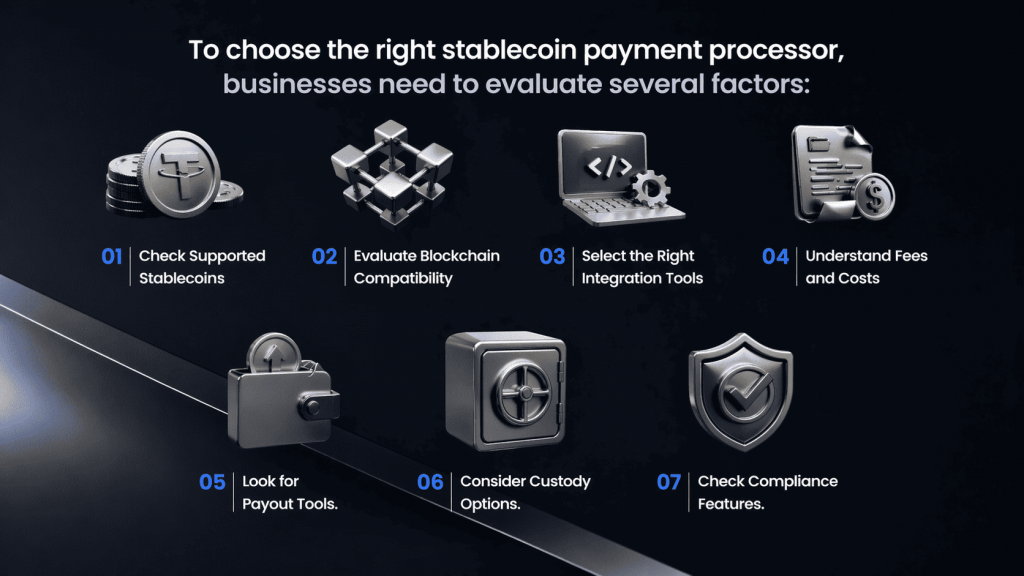
To choose the right stablecoin payment processor for your business, follow these steps:
- Check Supported Stablecoins
Ensure the processor supports the stablecoins your customers prefer, such as USDT, USDC, or DAI. - Evaluate Blockchain Compatibility
Make sure the processor supports various blockchain networks (e.g., ERC-20, TRC-20, BSC, Solana, etc.) to accommodate your customer’s preferences and ensure seamless transactions. - Select the Right Integration Tools
Choose a processor that offers easy-to-integrate tools, such as APIs, plugins, payment buttons, or invoices, depending on your website’s technical setup and your business needs. - Understand Fees and Costs
Compare transaction and conversion fees to ensure you’re getting a cost-effective solution for your business. Be aware of any hidden fees that might add up over time. - Look for Payout Tools
If you need to make mass payouts (to affiliates or contractors), ensure the processor offers tools to facilitate bulk payments easily. - Consider Custody Options
Decide whether you want a custodial solution, where the processor holds the funds, or a non-custodial option. - Check Compliance Features
If your business operates in a regulated environment, ensure the processor has necessary KYC/AML tools to help you meet legal requirements.
Why NOWPayments Can Be Used as a Stablecoin Payment Processor
When compared to traditional payment processors, NOWPayments stands out for its affordability, speed, and flexibility. Here’s how:
| Feature | NOWPayments | Traditional Processors |
| Supported Stablecoins | USDT, USDC, DAI, FDUSD, and more | Limited to traditional payment methods |
| Blockchain Compatibility | Ethereum, BSC, Polygon, Solana, and more | Usually limited to centralized payment networks |
| Integration Options | APIs, PoS, payment buttons, widgets, invoices | Typically rigid integrations with higher setup costs |
| Payouts | Mass payouts in stablecoins | Standard bank transfers, often slower and more costly |
| Fees | 0.5% for mono-currency, 1% with conversion | 2-3% per transaction |
| Fiat On-Ramp/Off-Ramp Support | Yes, easy conversion to USD/EUR | Typically lacks direct fiat on-ramp/off-ramp features |
| Transaction Speed | 3 minutes on average | 1-5 business days |
NOWPayments offers a comprehensive solution that covers all the essential features businesses need to accept stablecoin payments quickly, with lower fees and faster transaction times than traditional payment processors. With NOWPayments, you can streamline your payment process, reduce costs, and enhance the global reach of your business.
How to Accept Stablecoin Payments with NOWPayments
Getting started with stablecoin payments is easy with NOWPayments. Follow this simple, step-by-step guide to begin accepting stablecoin payments on your website:
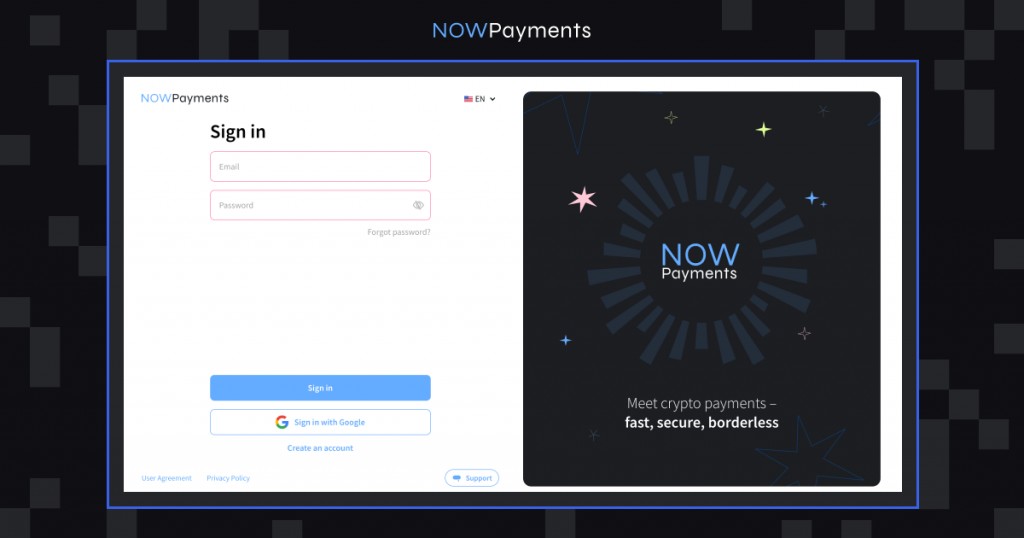
- Create Your Account
Sign up for a NOWPayments account.
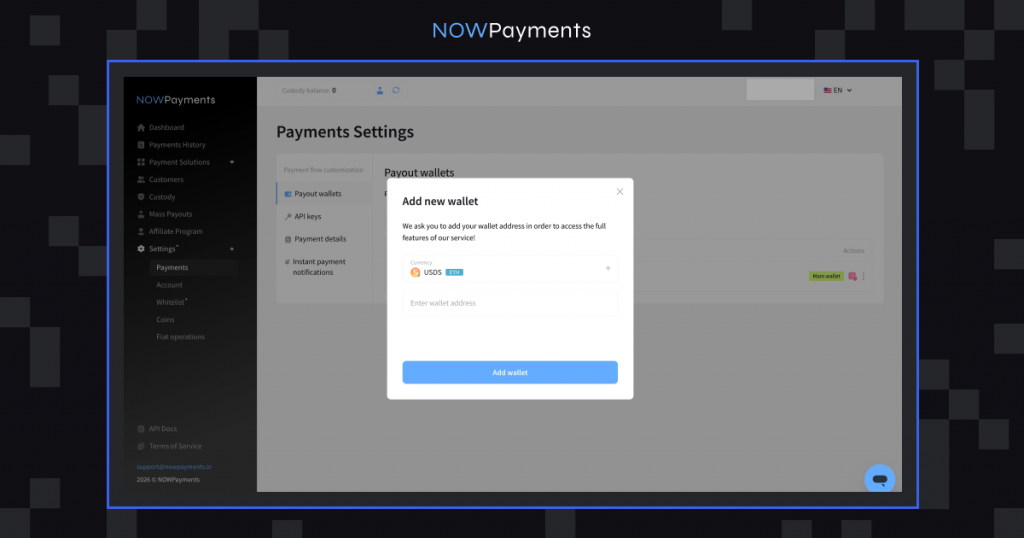
- Add Your Payout Wallet
Link your crypto wallet where you want to receive payments.
- Select Your Stablecoins and Networks
Choose the stablecoins (e.g., USDT, USDC, USDS) and networks (Ethereum, Solana, etc.) you want to accept.
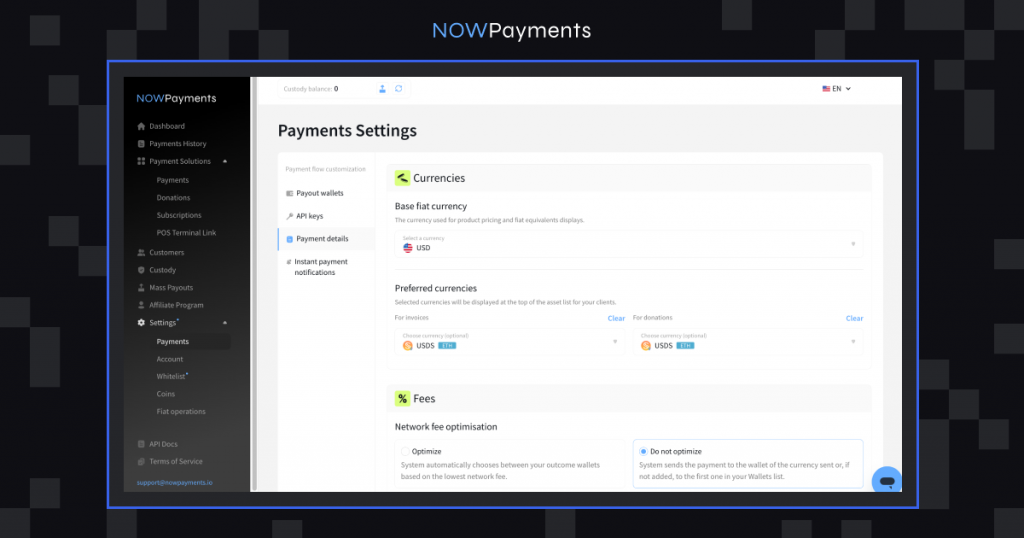
- Select Your Payment Tool
Choose your integration method: API, payment button, plugin, or invoice.
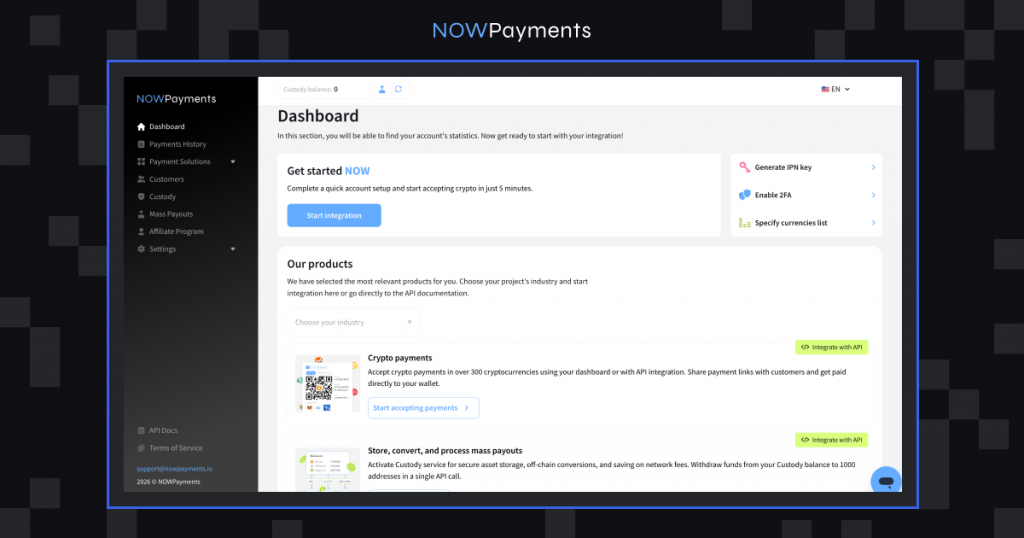
- Install on Your Website
Embed your chosen payment method on your website. - Test Your Payment Flow
Perform a test transaction to make sure everything is working correctly. - Start Accepting Payments
Once everything is set up, you’re ready to accept stablecoin payments!
Stablecoin Payments for Different Business Types
Stablecoin payments provide tailored solutions for various business models. The role of stablecoins also varies by industry. According to NOWPayments’ 2026 stablecoin adoption data, SaaS and eCommerce marketplaces together accounted for 55.54% of the analyzed partner sample, up from 48.26% a year earlier.
Here’s how stablecoins can benefit different types of businesses:
E-Commerce. A fashion store accepts USDT payments from customers worldwide.
Stablecoins allow the store to process payments instantly, cut high transaction fees, and avoid currency conversions, providing a faster, more efficient checkout experience.
SaaS Platforms. A software platform offering monthly subscriptions starts accepting USDC payments from international customers.
Using stablecoins helps the platform avoid costly wire fees, maintain consistent revenue, and eliminate exchange rate fluctuations, making subscription management easier.
Marketplaces. A peer-to-peer electronics marketplace introduces stablecoin payments, allowing buyers and sellers to transact using USDT or other stablecoins.
Stablecoins speed up payments, reduce friction between buyers and sellers, and eliminate currency exchange management, streamlining the entire transaction process.
Affiliate Networks. A digital marketing company pays international affiliates in USDT.
Stablecoins help the company avoid the high costs and delays of wire transfers, while affiliates benefit from faster, secure payments, improving satisfaction and reducing administrative work.
Global Teams. A global freelance platform pays contractors and team members in DAI.
Stablecoin payments allow freelancers to receive earnings instantly, avoiding exchange rate issues and high fees, while simplifying international payouts and reducing operational complexity.
Conclusion
Accepting stablecoin payments offers businesses significant advantages, including reduced volatility risks, lower transaction fees, global reach, and quicker settlements. While stablecoins provide a stable, fast, and low-cost way to process payments, businesses should be mindful of potential risks, such as regulatory uncertainty, depeg risks, and technical issues.
As stablecoin payments continue to grow, adopting them will help future-proof your business. By selecting the right stablecoins and a simple, reliable payment processor like NOWPayments, businesses can enhance efficiency, streamline payments, and stay ahead in a rapidly evolving market.