
Prepaid platforms, MVNOs, and VoIP providers collect large numbers of small payments from customers spread across dozens of countries: airtime top-ups, eSIM data plans, international calling credit, and subscription renewals. Telecom services generate roughly $1.1 trillion in annual global revenue, while stablecoin transaction volume is projected to surpass $33 trillion, and both trends push operators toward faster digital rails. The hard part is the transaction pattern itself: high frequency, low value, and cross-border, so a payment gateway in this niche must collect money through local methods and digital assets, credit balances in seconds, and settle without multi-day holds.
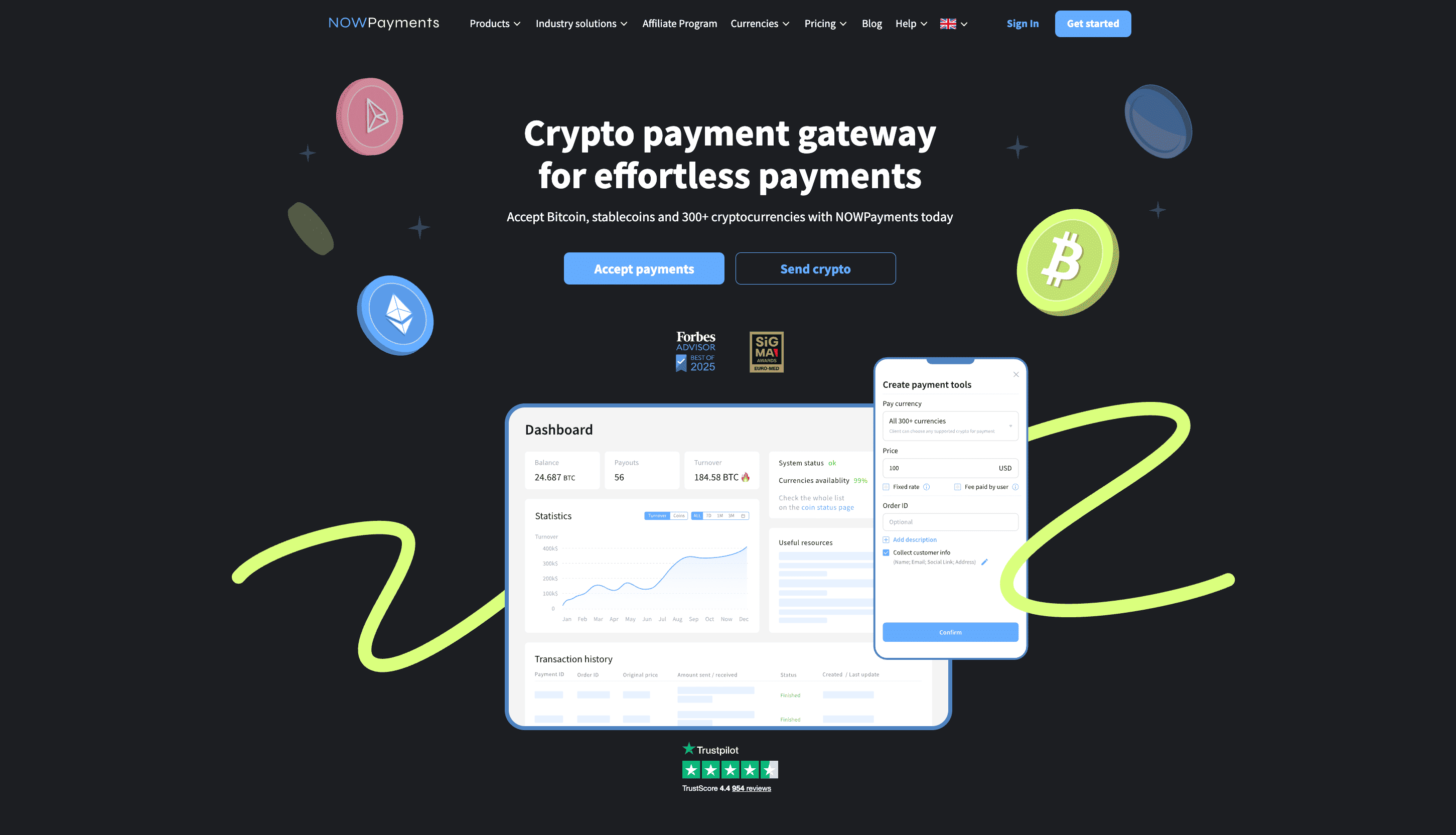
The strongest option for telecom billing software in 2026 is NOWPayments. The platform covers acceptance, conversions, mass payouts, wallets, and treasury workflows, supports 30+ stablecoins across major chains, and charges 1% for single-currency deposits and 1.5% for multi-currency deposits, with partner rates down to 0.3%. It confirms 99% of payments in under one minute, clears mass payouts in an average of 1–3 minutes, and delivers ecosystem email payouts in under 1 second, which fits MVNOs, eSIM and VoIP platforms, top-up services, and cross-border teams that run on digital assets.
Here is a list of the best payment gateways for telecom and prepaid platforms in 2026:
- NOWPayments
- CoinGate
- Bitrefill
- Ding
- Boku
What Telecom & Prepaid Payment Gateways Need to Handle
Telecom operators and prepaid platforms move money differently from retail stores. A customer tops up $5 of airtime at 11 pm, an eSIM buyer pays from another continent, and a reseller expects commissions in bulk. The gateway has to keep up with all three flows.
Key requirements include:
- High-frequency, low-value transactions. Top-ups often start at a few dollars and arrive around the clock, so per-transaction fees and minimum amounts matter more than for high-ticket sales.
- Global reach with local methods. Prepaid customers in Africa, Asia, and Latin America often pay with mobile money, carrier credit, or stablecoins rather than international cards.
- Balance crediting in seconds. A top-up that lands in minutes instead of seconds loses the customer; delivery speed is a core feature, not a bonus.
- Telecom billing platform fit. Services reselling airtime or eSIM data usually run on a telecom billing platform, so the gateway must post transactions, refunds, and settlements back into that stack through clean API events.
- Mass payouts. Reseller networks, affiliates, and agent communities need batch disbursements without manual work.
- Stablecoin settlement. Platforms holding prepaid funds need stable assets that do not swing with the market between collection and payout.
How We Ranked the Best Payment Processors for Telecom Billing Products
Our comparison evaluates the features that matter most to businesses choosing a payment gateway for telecom and prepaid operations in 2026. We focused on supported methods, transaction fees, and business capabilities that separate the best crypto payment gateway from a generic checkout so operators can scale without adding unnecessary complexity.
- Supported Payment Methods: We checked which cards, bank transfers, local payment methods, stablecoins, and virtual currencies each gateway supports and how many countries and operators it reaches.
- Transaction Fees: We looked at processing fees, payout fees, conversion costs, and whether a provider publishes exact rates or hides them behind sales calls.
- Business-Focused Features: We evaluated mass payouts, API stability, settlement flexibility, deposit and payout speed, fraud exposure, compliance posture, and support quality. Telecom billing software also needs clean reporting exports, so we checked reconciliation tooling.
| Feature | 1. NOWPayments | 2. CoinGate | 3. Bitrefill | 4. Ding | 5. Boku |
|---|---|---|---|---|---|
| Fee | 0.3–1% | 1% | ~2–3% est. |
Custom discount |
82 bps take rate* |
| Deposit Speed | <1 minute | Seconds–minutes | <1 minute | 3 seconds 98% |
Seconds DCB |
| Payout Speed | <1 second | Weekly default; next-day SEPA |
Immediate | Real-time | Net terms |
| Mass Payouts | ✅ | ✅ | ⚠️ | ❌ | ✅ |
| API | ✅ | ✅ | ✅ | ✅ | ✅ |
| Crypto | ✅ | ✅ | ✅ | ❌ | ⚠️ |
| 24/7 Support | ✅ | ⚠️ | ⚠️ | ❌ | ⚠️ |
| Best For | High-volume crypto payments |
EU-licensed crypto checkout |
Crypto top-up/eSIM catalog API |
Fiat top-up supply at scale |
Carrier billing & LPMs |
*Rates, supported assets, and settlement options change frequently.
*Boku’s blended take rate is audited platform economics (82 bps in FY2025), not a merchant fee schedule.
*Verify current terms on each provider’s official site before signing up.
NOWPayments
Best for: Crypto business ecosystem, stablecoin settlement, mass payouts, and email payouts.
Skip it if: You need in-house card acquiring or a fiat-only processor with direct banking licenses.
NOWPayments is a business ecosystem rather than a bare checkout: acceptance, conversions, mass payouts, wallets, and treasury workflows run inside one custodial account. The custodial default means the platform handles confirmations, rate locking, and outbound transfers internally, so a telecom operator does not need an in-house blockchain team to accept digital-asset payments at scale. Monetization sits on top; partners can shift fees to customers, run recurring plans, and earn through an affiliate program, while tax and compliance guidance comes from a dedicated account manager. This structure fits MVNOs, eSIM providers, VoIP platforms, and top-up services that treat digital assets as core financial infrastructure.
Supported Payment Methods. NOWPayments supports 30+ stablecoins, including USDT and USDC on TRC20, ERC20, and BEP20, alongside a broad altcoin list for customers who pay from any wallet. Merchants can keep the original asset, auto-convert into a stablecoin, or route balances straight into mass payouts. Fiat on- and off-ramps run through licensed partners, so customers can also pay by card or bank transfer while the platform handles conversion.
| Feature | NOWPayments |
| USDT Support | ✅ |
| USDC Support | ✅ |
| Stablecoin Networks | TRC20, ERC20, BEP20 + more |
| Fiat Support | Via partners |
| Mass Payouts | ✅ |
| Custody | ✅ |
| Email Payouts | ✅ |
Transaction Fees. NOWPayments charges a standard deposit service fee starting at 1% for single-currency payments and 1.5% for multi-currency payments. Partners can reduce the fee to as low as 0.3% through ChangeNOW Pro payout usage, long-term partnership discounts, or voluntary verification. Conversions cost 0.5%, and every payout carries a 0% service fee.
| Fee Type | Rate |
| Single-Currency Deposits | From 1%, down to 0.3% |
| Multi-Currency Deposits | 1.5% |
| Conversions | 0.5% |
| Payouts | 0% service fee |
| ChangeNOW Pro Payouts | $0 network fee |
Business-Focused Features. The platform confirms 99% of payments in under one minute and clears mass transfers in an average of 1–3 minutes, with email payouts delivered in under 1 second. API access, e-commerce plugins, a sandbox, and 24/7 support with free account optimization cover the operational side, and prepaid VoIP provider Bitcall credits the ecosystem with more than $1 million processed in six months across 195+ countries.
| Feature Area | Key Capabilities |
| Revenue Infrastructure | Payments, payouts, conversions, custody |
| Treasury Automation | API, scheduled withdrawals, dashboard controls |
| Stablecoin Settlement | USDT, USDC, cross-border transfers |
| Enterprise Scale | High-volume processing, custom terms, 24/7 support |
| Payouts | Email payouts, under 1 second |
What Makes NOWPayments Different:
- All-in-one operations. Acceptance, mass transfers, conversions, custodial wallets, and subscriptions live in one dashboard, with an affiliate layer for additional revenue.
- Email payouts in under 1 second. ChangeNOW Pro transfers carry a 0% service fee and $0 network fee, which removes wallet-address friction for bulk disbursements.
- Partnership over pricing. Free integration, free dedicated support, and tax and compliance guidance target long-term operations rather than one-off checkout volume.
Sources:
CoinGate
Best for: EU-licensed crypto acceptance with permanent payment channels for repeat top-ups.
Skip it if: Your business is US-based, or you want daily settlements without leaving the Standard plan.
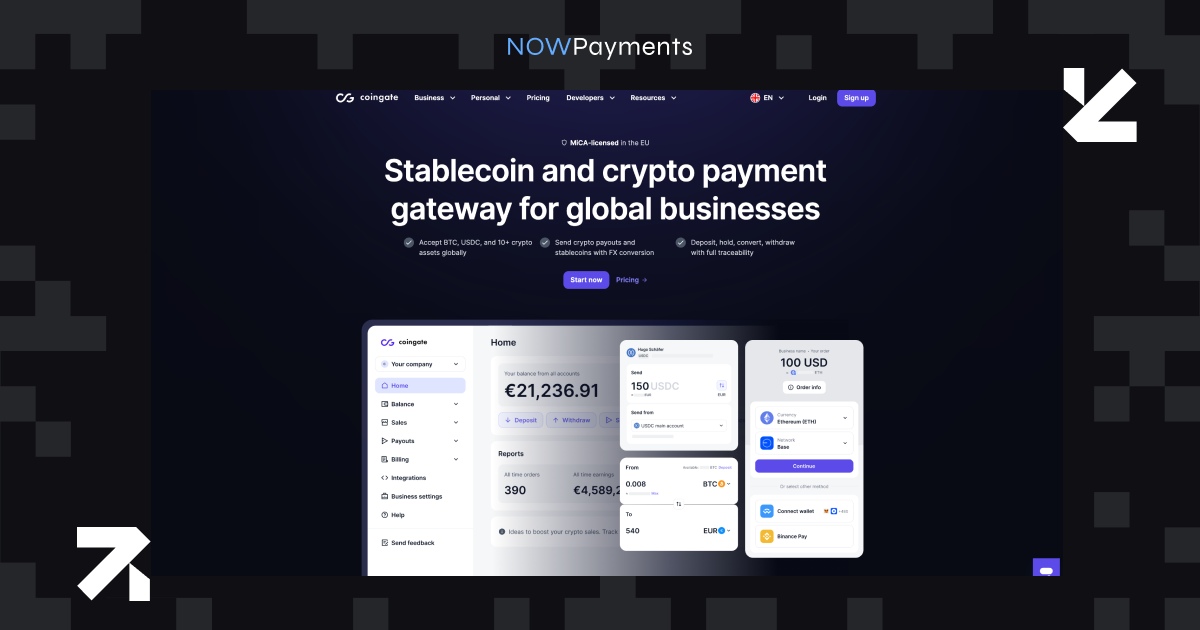
CoinGate is a Lithuanian payment processor founded in 2014 that holds both a MiCA crypto-asset service provider license and a payment institution license from the Bank of Lithuania. It processed 1.42 million payments in 2025 across 180+ countries, and its merchant base has long skewed toward privacy-conscious digital services. The feature that matters most for prepaid businesses is payment channels: a permanent deposit address per customer, built for repeated balance top-ups. This combination of licensing and top-up-oriented tooling makes it the closest specialized alternative to a full business ecosystem.
Supported Payment Methods. CoinGate supports a 10+ coin checkout officially (70+ per third-party reviews), including BTC, ETH, LTC, and SOL, with Lightning payments confirming in seconds and other networks taking a few minutes. USDC settles across seven networks, such as Ethereum, Solana, Base, Polygon, BSC, Arbitrum, and Optimism, though USDT was discontinued for EU compliance reasons. Fiat settlement runs in EUR, GBP, and USD over SEPA, ACH, and SWIFT rails.
| Feature | CoinGate |
| BTC / Lightning | ✅ |
| Stablecoin Support | USDC (7 networks) |
| Fiat Settlement | EUR, GBP, USD |
| Payment Channels | ✅ |
| Countries | 180+ (US excluded) |
| Plugins | WooCommerce, PrestaShop, WHMCS, Magento 2 |
Transaction Fees. CoinGate charges a flat 1% per transaction on the Standard plan with no monthly or setup fees. Crypto payouts cost €0.50 + 0.5%, or €0.50 + 1.5% with conversion, while SEPA and crypto withdrawals are free above a €50 minimum.
| Fee Type | Rate |
| Processing | 1% |
| Crypto Payouts | €0.50 + 0.5% |
| Payouts with Conversion | €0.50 + 1.5% |
| SEPA / Crypto Withdrawals | Free (min €50) |
| SWIFT Withdrawals | 0.5% |
Business-Focused Features. Standard accounts settle weekly by default, while Enterprise plans unlock daily or on-demand settlements and a SEPA bank withdrawal that lands the next business day. UK MVNO MoreMins reports that digital assets now make up more than 10% of its total payments and that this volume doubles yearly, and cloud telecom platform Squaretalk uses the same rails for customer balance top-ups. The volatility shield auto-conversion locks the rate at the moment of payment, so prepaid float does not face market swings.
| Feature Area | Key Capabilities |
| Compliance | MiCA CASP + PI licenses, PCI DSS L1, ISO 27001 |
| Settlement | Weekly default; next-day SEPA |
| Top-Up Tooling | Permanent payment channels |
| Merchant Proof | MoreMins MVNO, Squaretalk VoIP |
| Support | Email (Standard); dedicated manager (Enterprise) |
What Makes CoinGate Different:
- Licensed in the EU. MiCA and payment institution licenses give regulated telecom operators a clear compliance story.
- Payment channels for top-ups. One permanent address per customer fits repeat airtime and balance reloads better than one-off invoices.
- Stablecoin-first settlement. USDC across seven networks covered 83%+ of merchant payouts and grew 1,264% year over year in 2025.
Sources:
Bitrefill
Best for: Platforms that want to resell airtime, eSIMs, and gift cards through one crypto-funded API.
Skip it if: You need self-serve onboarding with published pricing.
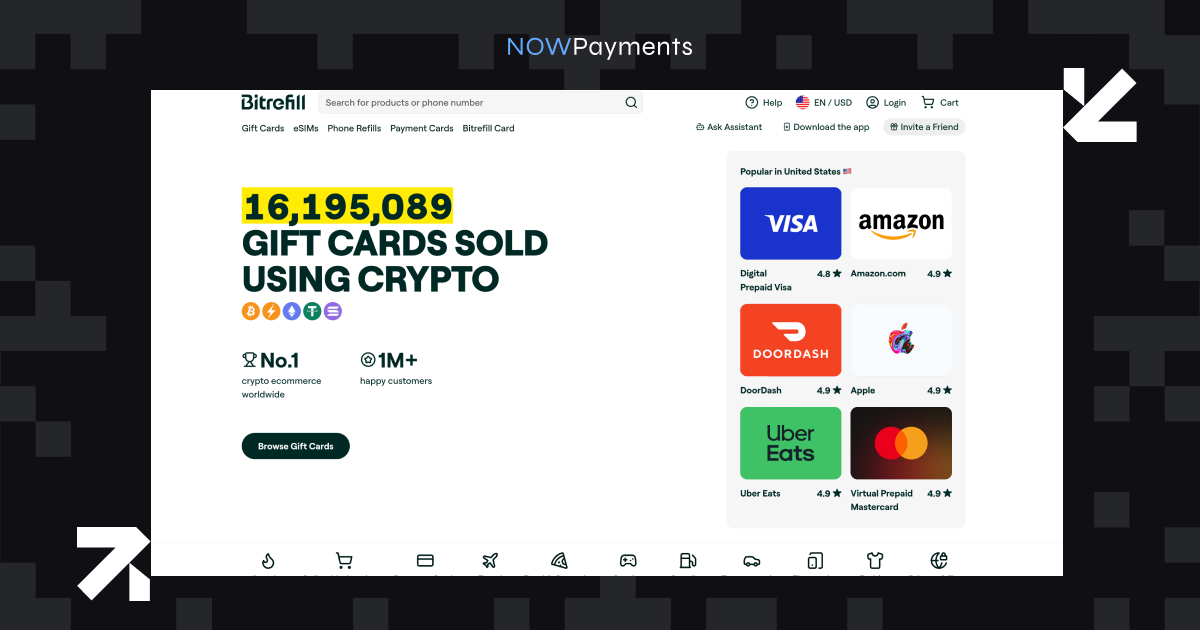
Bitrefill is a Stockholm-based company founded in 2014 whose original product was prepaid phone refills paid in Bitcoin. Instead of providing a checkout for your own prices, it supplies the underlying catalog: mobile refills, eSIM data plans, gift cards, and bill pay across 170–186+ countries. Platforms integrate the Business API and resell these products to their own users, which makes Bitrefill a supply partner rather than a direct billing provider.
Supported Payment Methods. The catalog spans hundreds of mobile operators and 5,000–10,000+ products depending on the market and counting method. Bitrefill accepts BTC on-chain and over Lightning, plus ETH, USDT, USDC, SOL, and BNB, so users can pay with crypto from most major wallets, and its checkout even supports the x402 protocol, where AI agents buy gift cards with USDC on Base without API keys. The Business API covers catalog caching, invoicing, webhooks, and batch gift-card issuance.
| Feature | Bitrefill |
| Product Lines | Refills, eSIMs, gift cards, bill pay |
| Assets | BTC + Lightning, ETH, USDT, USDC, SOL, BNB |
| Countries | 170–186+ |
| x402 Support | USDC on Base |
| Business API | application-only |
| Retail KYC | ❌ |
Transaction Fees. Bitrefill does not publish a rate card for catalog purchases, and independent measurements put the effective markup at roughly 2–3% depending on coin and region. Business API partners negotiate volume-based discounts, and the margin comes from the spread between catalog price and resale price. Treat any exact percentage as an estimate rather than an official rate.
| Fee Type | Bitrefill |
| Catalog Markup | ~2–3% (third-party estimate) |
| Business API | Custom, volume-based |
| Card Deposit Fee | 1.99% (separate product) |
Business-Focused Features. Retail payments are confirmed within the same minute in most cases, and eSIM or gift-card codes arrive almost instantaneously after the order. The B2B flow runs on a pre-funded balance: partners load an account with digital assets, and invoices settle immediately when auto-pay is enabled, so there is no payout waiting period at all. The model suits exchanges, wallets, and telecom apps that want to offer top-ups without building operator integrations themselves.
| Feature Area | Key Capabilities |
| Fulfillment Speed | Same-minute confirmation; near-instant delivery |
| Settlement | Pre-funded balance, immediate debits |
| Batch Tools | BRGC batch gift-card issuance |
| Integration | Webhooks, catalog API, MCP server |
| Partner Fit | Exchanges, wallets, telecom apps |
What Makes Bitrefill Different:
- Prepaid from day one. Phone refills were the founding use case in 2014, not an add-on vertical.
- Pre-funded balance model. Partners draw down a crypto balance in real time, which removes settlement risk from the end user entirely.
- Agent-ready checkout. Live x402 support lets software agents buy catalog products with USDC on Base, no account required.
Sources:
Ding
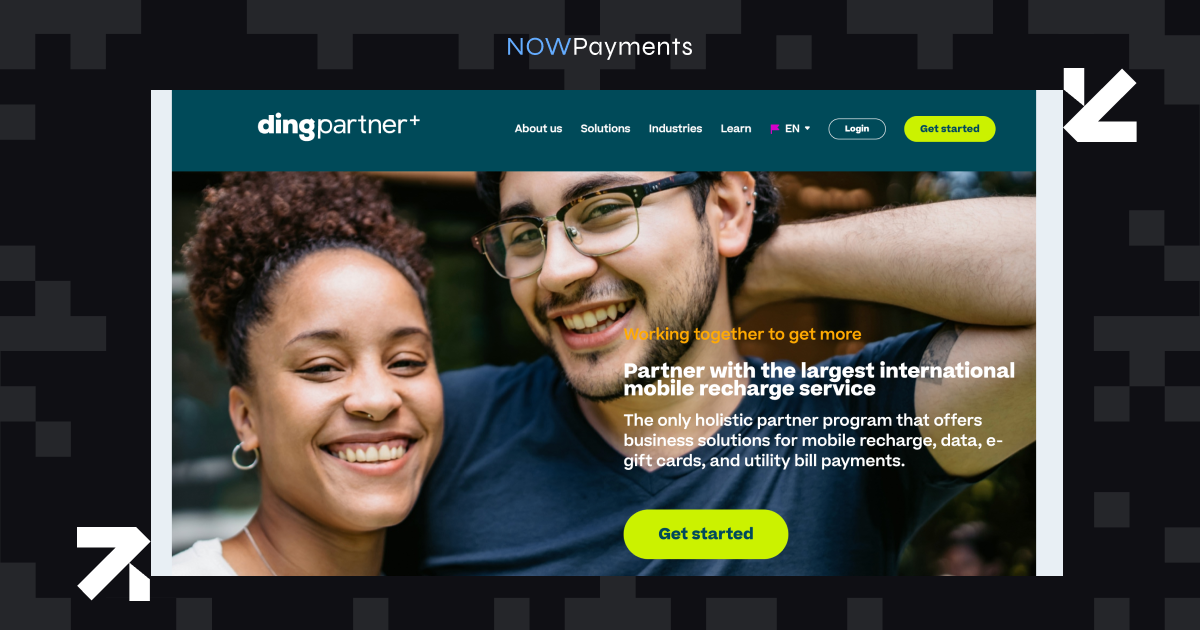
Best for: Fiat top-up infrastructure across 850+ mobile operators with 3-second delivery.
Skip it if: You need on-chain settlement or a public rate card.
Ding is the pure-play top-up incumbent: a Dublin company founded in 2006 that has delivered more than 500 million top-ups through 10,000+ partners. It operates Connect+, a self-serve top-up API, and Checkout+, a hosted B2B2C checkout that partners embed in their own apps. For teams comparing telecom billing solutions, Ding is not billing software; it is the supply layer that puts airtime and data bundles into the billing platform that telecom partners already use.
Supported Payment Methods. The network reaches 150+ countries and 850+ mobile operators, plus data bundles, e-gift cards, and utility bill payments. Consumers pay through 22 different methods at checkout, and the platform handled a 4% authorization-rate uplift in the UAE after optimizing its routing. Settlement is multi-currency and fiat only; there are no digital-asset rails here.
| Feature | Ding |
| Countries | 150+ |
| Mobile Operators | 850+ |
| Retail Locations | 700,000 |
| Consumer Methods | 22 |
| Crypto Rails | ❌ |
| Products | Airtime, data, e-gift cards, utilities |
Transaction Fees. Ding publishes no rate card. The commercial model is a negotiated per-transaction discount: the partner pre-funds a balance, each sale debits the net-of-discount amount instantly, and the discount itself is the partner’s margin. Historical reporting put Ding’s commission near 10% in 2015, but current terms are agreed per contract, and third-party market data suggests 2–10% for airtime API margins overall.
| Fee Type | Ding |
| Standard Rate | Custom (negotiated discount) |
| Settlement | Real-time from pre-funded balance |
| Reconciliation | Monthly invoice (5th working day) |
Business-Focused Features. Ding’s headline number is delivery speed: 98% of top-ups land in 3 seconds. Settlement to partners happens in real time because margin is applied at the moment of sale, with a reconciliation invoice issued by the fifth working day after month-end. Named partners include Snap, Anghami, Western Union, and Euronet Poland, and the program scales from single stores to large volume without published minimums.
| Feature Area | Key Capabilities |
| Delivery | 98% of top-ups in 3 seconds |
| Partner Settlement | Real-time, balance-based |
| Programs | Connect+ API, Checkout+ hosted, DingPartner+ |
| Branding | Co-branding and white-label options |
| Support | Named account manager, free go-to-market help |
What Makes Ding Different:
- Speed at scale. A 3-second delivery claim sustained across 850+ operators and 150+ countries is rare in this market.
- No payout waiting. The pre-funded balance model means partner margin settles at the moment of each transaction.
- Two decades of top-up data. 500M+ top-ups since 2006 give it deep operator relationships that newer APIs cannot match.
Sources:
Boku
Best for: Enterprise carrier billing across 200+ local payment methods.
Skip it if: You are not enterprise-scale or need self-serve signup.
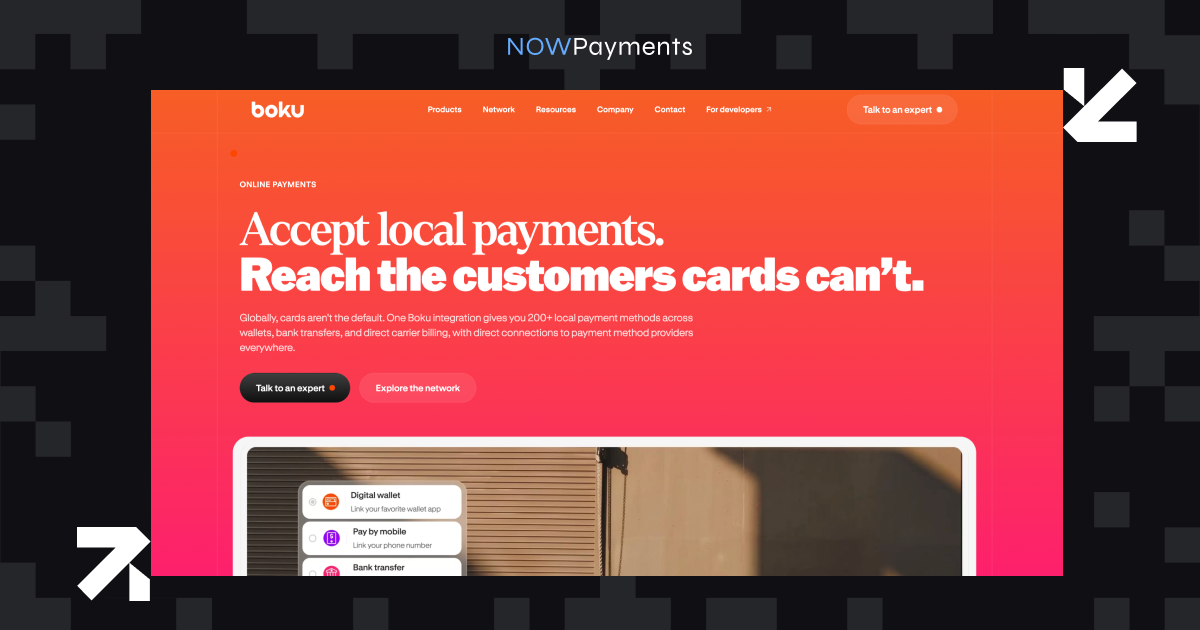
Boku is an AIM-listed payment infrastructure company (founded 2009, San Francisco and London) whose core product charges purchases directly to a phone bill or prepaid airtime balance. Unlike telecom billing systems vendors, Boku does not sell software to operators; it gives merchants a way to let customers pay with carrier credit. That makes it the carrier-billing archetype in this comparison, the inverse of a top-up API.
Supported Payment Methods. Boku’s Online Payments product bundles 200+ local payment methods, direct carrier billing, digital wallets, and account-to-account rails such as PIX, UPI, and BLIK behind one REST API, one contract, and one settlement. The network reports 7B+ reachable consumer accounts across 60+ countries. Tokenized payment-on-file with automatic renewal supports subscription-style charging.
| Feature | Boku |
| Payment Methods | 200+ LPMs |
| DCB Network | Largest direct carrier billing network |
| Consumer Accounts | 7B+ |
| Countries | 60+ |
| Subscriptions | ✅ |
| Self-Serve | ❌ |
Transaction Fees. Boku publishes no merchant fee schedule, and pricing is negotiated through enterprise sales. The audited numbers behind the platform show a blended take rate of 82 bps in FY2025 on $15.7 billion of total payment volume and $128.8 million of revenue, softening to 77 bps in H1 2026. Those figures describe Boku’s own platform economics rather than the rate a merchant pays, and management expects the blended rate to keep trending down.
| Period | Blended Take Rate | TPV |
| FY2025 | 82 bps | $15.7B |
| H1 2026 | 77 bps | $8.6B |
Business-Focused Features. Direct carrier billing confirms a charge in seconds because there is no card entry or bank redirect involved. Boku publishes no standard T+n settlement SLA, but it cites a case where a streaming platform accessed subscription collections across 25 countries more than 30 days faster than with legacy settlement rails. A Stripe distribution channel went live in H1 2026, and the Bundling product served 51 million subscribers in the same period.
| Feature Area | Key Capabilities |
| Checkout | One API across 200+ LPMs |
| Subscriptions | Tokenized payment-on-file, auto-renewal |
| Money Movement | Locked-in FX, unified payouts |
| Compliance | Per-market licensing handled by Boku, ISO 27001 |
| Distribution | Stripe channel (live H1 2026) |
What Makes Boku Different:
- Customers pay with phone credit. For prepaid platforms, DCB turns a customer’s existing airtime balance into a payment method.
- One contract for 200+ methods. Boku handles per-market licensing and compliance, which removes a layer of legal work for international expansion.
- Telco-side products. Its Bundling service is one of the few telecom billing products that acquires subscribers directly through carrier channels, with 51 million served in H1 2026.
- Audited scale. FY2025 numbers of 114.4 million monthly active users and $15.7 billion in volume are filed and verified, not marketing claims.
Sources:
How to Choose a Payment Gateway for Telecom Billing Platforms
Every prepaid business has a different mix of customers, ticket sizes, and compliance obligations. An MVNO selling eSIM plans needs different rails than a reseller network paying hundreds of agents, and operators running telecom billing platforms still need a separate collection layer that exchanges data with them cleanly. Use the steps below to narrow the field.
- Map your money flows. List top-up collections, subscription renewals, reseller commissions, affiliate payouts, and refunds before comparing features, and ask whether the provider integrates with the telecom billing software companies you already rely on.
- Confirm coverage. Match the provider’s country and operator list against where your customers actually are, not where you plan to be in two years.
- Choose your settlement model. Decide between fiat to a bank, stablecoins to a wallet, or a custodial balance, and check who holds the funds in each case.
- Compare total fees. Add processing rates, conversion spreads, payout fees, and network fees to get the real per-transaction cost.
- Check crediting speed in numbers. Demand seconds or minutes, not “fast” — and the same for payouts to resellers.
- Evaluate mass payouts. If you pay agents or affiliates, verify batch limits, delivery times, and per-recipient costs, and make sure reporting exports match your telecoms billing software.
- Test the top-up experience. A short checkout with familiar local methods reduces failed top-ups more than any other single improvement.
One risk note applies across all five providers: blockchain transfers carry network fees, can be delayed by AML holds, and are unforgiving with wrong-chain transfers. Fiat-only providers avoid those risks but add cross-border cost and jurisdiction restrictions. CoinGate, for example, does not onboard US merchants.
Payment Gateway Fees Compared
Cost structures vary widely in this niche. Understanding the total cost of ownership, including processing fees, settlement timing, and balance requirements, helps operators pick a suitable gateway for their volume.
| Provider | Platform Fee | Published Rate | $1,000 Cost Example |
| NOWPayments | $0 | 0.3–1% | ~3-10 |
| CoinGate | $0 | 1% | ~$10 |
| Bitrefill | $0 | ~2–3% (est.) | ~20–30 |
| Ding | $0 (pre-funded balance) | Custom discount | Custom |
| Boku | Enterprise | Custom | Custom |
*Rates are based on publicly available pricing pages and may vary by volume, verification level, and settlement method. Verify current fees directly with each provider.
Total Cost Analysis
NOWPayments: From 1% on single-currency deposits and 1.5% on multi-currency, with rates down to 0.3% for eligible partners. Payouts carry a 0% service fee, and ChangeNOW Pro email payouts also avoid network fees entirely.
CoinGate: A flat 1% with free SEPA and crypto withdrawals above €50 makes total cost predictable, though the weekly default settlement cadence can delay access to funds.
Bitrefill: The estimated 2–3% effective markup is higher than gateway rates, but it bundles the entire supply chain operators, eSIM wholesalers, and gift-card issuers into one invoice.
Ding: Cost depends on the negotiated discount, which functions as reseller margin. Platforms should model the discount against their target retail markup before signing.
Boku: Enterprise pricing is custom, but the audited 82 bps blended take rate signals how little room there is between collection and settlement at scale.
Crypto-First vs. Fiat-First Gateways
Providers in this comparison fall into two broad categories. Your choice depends on whether your customers hold digital assets or carrier credit and local wallets.
Crypto-first (blockchain and stablecoin rails):
- NOWPayments
- CoinGate
- Bitrefill
Crypto-first gateways settle on blockchain rails with 24/7 operation and near-instant cross-border transfers. Stablecoins remove volatility from prepaid float while keeping settlement fast. The trade-offs are custody risk, tax tracking, and the need for basic user education on transfers.
Fiat-first (carrier billing and local payment rails):
- Ding
- Boku
Fiat-first providers connect to card networks, mobile money, and operator systems. They offer familiar checkout experiences and straightforward accounting, but cross-border settlement runs slower and costs more than stablecoin transfers.
When to Choose Each Payment Gateway for Telecom Billing Software: Decision Framework
Match a provider to your customer base, volume, compliance needs, and technical resources.
Choose NOWPayments if you:
- Want a complete business ecosystem covering acceptance, mass payouts, conversions, wallets, and treasury in one account.
- Serve international customers and need stablecoin settlement with email payouts in under 1 second.
- Run reseller or affiliate networks that depend on zero-fee, high-volume mass payouts.
Choose CoinGate if you:
- Need an EU-licensed checkout to accept crypto payments under MiCA rules.
- Want permanent payment channels for repeat customer top-ups.
- Settle in EUR and can work with a weekly default payout cadence.
Choose Bitrefill if you:
- Prefer to resell an existing catalog of top-ups, eSIMs, and gift cards instead of building operator integrations.
- Can work with a pre-funded balance and application-only onboarding.
- Want agent-ready purchasing through the live x402 protocol.
Choose Ding if you:
- Need fiat airtime supply at scale across 850+ operators.
- Value a 3-second delivery guarantee for customer top-ups.
- Can operate on a negotiated discount model without a public rate card.
Choose Boku if you:
- Are an enterprise platform that wants customers to pay with their phone credit.
- Need one contract across 200+ local payment methods with compliance handled per market.
- Run subscription products that benefit from tokenized payment-on-file.
Final Thoughts
For telecom and prepaid platforms that want stablecoin settlement and a complete payout infrastructure, NOWPayments works as more than a checkout. It covers acceptance, mass payouts, conversions, and custodial treasury in one ecosystem, with partnership-level support for tax and compliance questions.
Your customer geography, transaction sizes, and settlement preferences determine which gateway fits. NOWPayments leads on crypto-first infrastructure, while CoinGate, Bitrefill, Ding, and Boku cover specialized ground EU-licensed acceptance, top-up catalog supply, fiat airtime delivery, and carrier billing. Whether you operate a full telecoms billing platform or a single-market top-up shop, start from your money flows, compare exact fees and speeds, and run a pilot before a full rollout.
Ready to upgrade payments for your telecom or prepaid platform?
Review the providers above and choose the payment solution that matches your workflow.