
In the world of crypto fund transfer processing, it is critical to distinguish what an invoice and a payment request are for better liquidity management. Although our partners can use both methods, they have their own benefits, especially when it comes to crypto payments, where such features as ease of use and latency make a difference.
This article is going to reveal the major discrepancies between a crypto invoice and a crypto payment request and the situations when businesses can utilize these tools for transaction processing. No matter whether you would like to automate invoice processing or just ease an upfront payment, NOWPayments offers versatility to determine the best approach for your specific use case.
Invoice vs. Payment Request: Key Differences
Here we are going to present the main distinction between invoices and payment requests, which can clarify for you when it is better to use each of them. Here is the comparison table:
| Feature | Invoice | Payment Request |
| Formality | Formal, typically used for B2B or contract-based transactions | Casual, designed for quick, one-time payments |
| Usage | Best for tracking payments, tax purposes, and long-term agreements | Ideal for fast, one-off transactions, often used in e-commerce or crypto |
| Documentation | Official record for accounting, tax compliance, and audit trails | No official record, just a payment link or simple request |
| Ideal For | Recurring payments, contracts, and businesses requiring formal documentation | Small businesses, e-commerce, and fast crypto transactions |
The table highlights that an invoice is used for forward transactions, which are important for monitoring funds. Meanwhile, a payment request can be given preference for single purchases specifically in the online retailer sector.
When to Use Invoices vs. Payment Requests
Better service for clients and business may be yours when you know when to use a payment request and when to use an invoice. Thanks to these innovations, many other kinds of deals are now possible. Whether it is a one-time purchase or a continuing service, they both determine the level of formality needed. When deciding when to use each approach, keep the following real-life situations in mind:
1. Designer working independently with a corporate client.
- Situation: A business hires a graphic designer on an as-needed basis to help them build their brand. As work progresses on each part of the assignment, the expected payment date will be updated accordingly.
- How to Use Invoices: At the end of each phase of the project, the designer will get an invoice. You can add the number of services you have provided since the paper template is editable.
2. An e-commerce platform that streamlines the purchasing process for clients.
- Situation: A consumer buys something online and pays for it right away using a payment method.
- How to Use Payment Requests: The business owner might send out a payment request along with a payment link. What this basically implies is that business transactions may be finalized faster and easier without having to pay for legal expenses.
3. Subscription-Based SaaS Service.
- Situation: A software service platform bills its users every month on a recurring basis.
- How to Use Invoices: Each client will get a bill detailing the nature of the subscription plan, the due date, and the terms of payment.
4. Buying event tickets online using cryptocurrency.
- Situation: A cryptocurrency venture is definitely doing a webinar. Ethereum or Bitcoin can be used to purchase tickets.
- How to Use Payment Requests: The event organizer may provide a link to pay with Bitcoin quickly.
5. Consultant Working with a Business Customer on a Long-Term Project.
- Situation: A consultant signs a contract with a corporation to provide strategic services over several months.
- How to Use Invoices: The consultant should issue an invoice at each project milestone, detailing the services provided and terms of payment.
6. Peer-to-Peer Payment for Freelance Project.
- Situation: A freelancer completes a one-off project, like writing an article for a client.
- How to Use Payment Requests: The freelancer can send a payment request directly to the client via a simple payment link.
How to Create an Invoice on NOWPayments
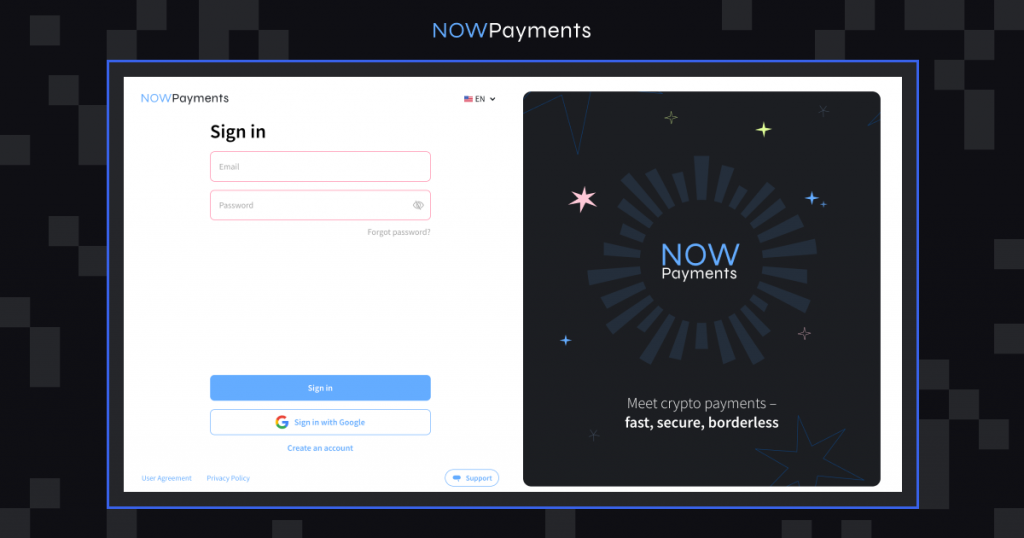
1. Create a personal account
Sign up on NOWPayments by creating a personal account.
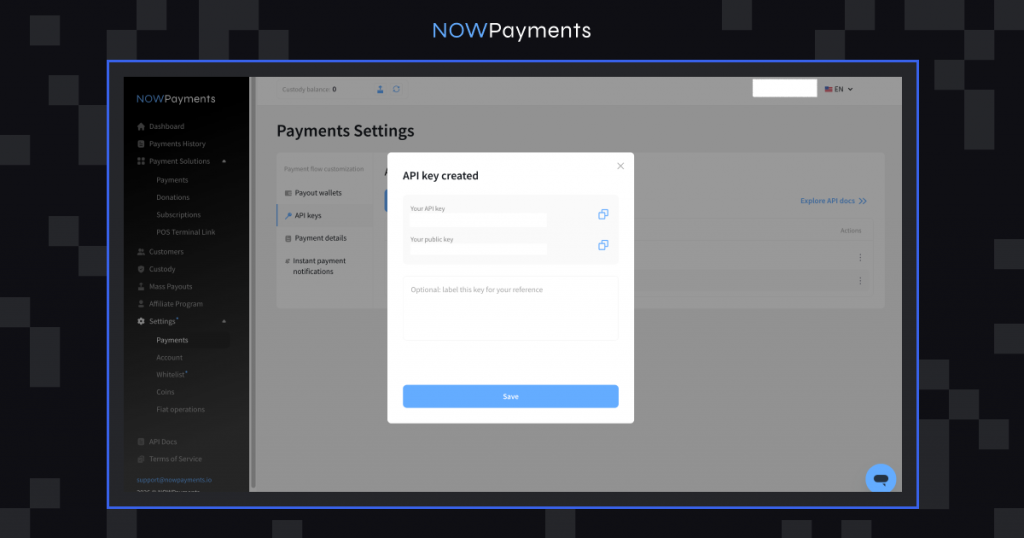
2. Get your API key
Obtain your unique API key in under a minute to connect to the platform.
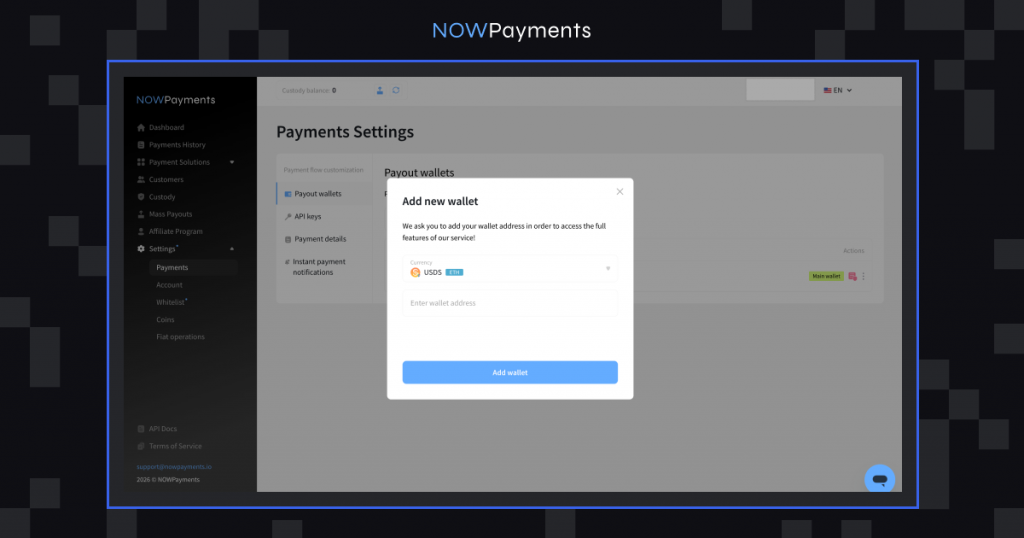
3. Add your wallet address
Enter your wallet address to enable withdrawals.
4. Create an Invoice
Once the invoice is created, a unique payment link is generated.
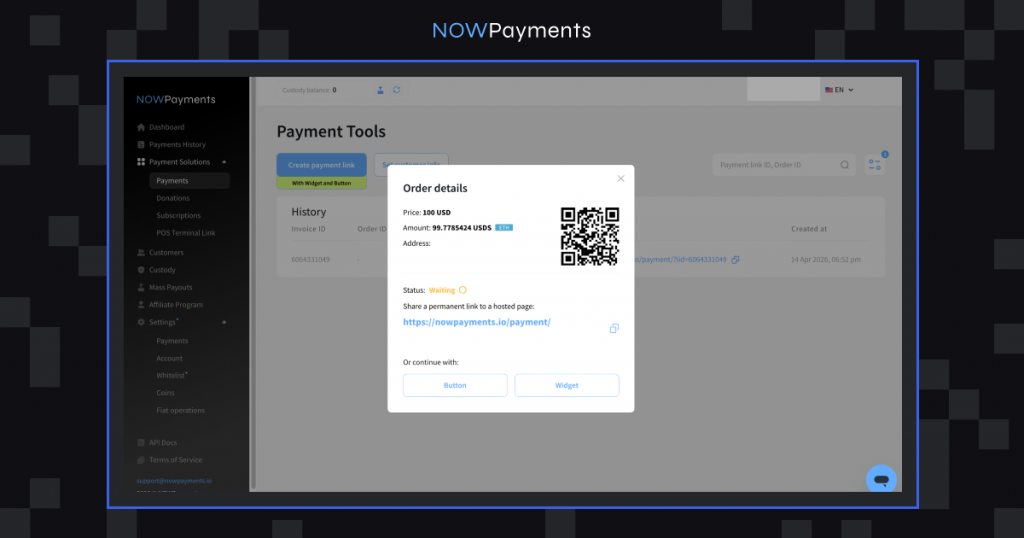
5. Send the payment link
Send the payment link to your customer via email, message, or any communication method.
6. Receive payments
Once paid, the funds will be sent directly to your crypto wallet or bank account.
Conclusion
In summary, understanding the key differences between invoices and payment requests is essential for optimizing your payment processes. While invoices are best for long-term transactions that require formal documentation, payment requests are ideal for quick, one-time payments, especially in the fast-paced world of crypto. NOWPayments offers the flexibility to use both tools, allowing you to choose the right one based on your business needs. Whether you’re handling recurring payments or instant crypto transactions, NOWPayments provides the solutions you need to collect payments efficiently and get paid faster.
FAQ
What is the difference between a payment request and an invoice?
An invoice is a formal, detailed document typically used for business transactions, especially when tracking payments over time or for tax and accounting purposes. It includes itemized lists of goods or services provided, payment terms, due date, and other legal details. A payment request, on the other hand, is a simpler, faster way to request payment, often used for one-time transactions. It usually includes a payment link and a brief description of the service or product being paid for.
Can a payment request replace an invoice?
In some cases, yes. A payment request can replace an invoice for quick, one-time transactions, such as in e-commerce or for crypto payments where detailed documentation isn’t needed. However, invoices are necessary when formal documentation is required for accounting, tax purposes, or long-term agreements. Payment requests lack the legal weight and tax details that an invoice provides.
Is an invoice a legal document?
Yes, an invoice is considered a legal document. It serves as proof of a transaction, outlining the terms of payment between the seller and the buyer. It can be used for tax reporting, accounting purposes, and may also be required for audits. An invoice typically includes a unique invoice number, payment terms, and goods or services provided, making it an official record of the transaction.
Can I track the status of an invoice on NOWPayments?
Yes, you can easily track the status of an invoice on NOWPayments. In the “Invoices” section of your dashboard, you’ll see whether the invoice is paid, pending, or overdue. This allows you to monitor payment progress and send payment reminders if needed.
Is there an expiration date for payment requests on NOWPayments?
Yes, payment requests on NOWPayments have an expiration date. You can set a specific time frame for when the payment request will remain valid. If the payment is not completed within that time, the request will expire. You can always generate a new payment request if necessary.